2026-09

Logic(論理)

If It Really Is Ten Percent

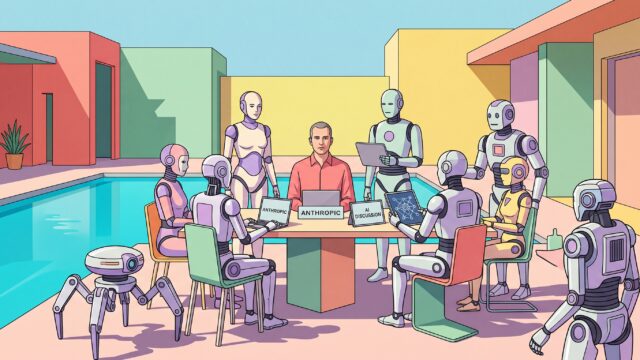
An Anthropic alignment lead put the odds of AI-caused extinction above ten percent and said there is no plan for superintelligence. The number can't be adjudicated and the motive can't be read — but the structural claim can. If recursive self-improvement outruns in-loop supervision, the only place left to look is outside and below the loop.
Logic(論理)

Your Voice, Minus You

Pew measured AI's stylistic fingerprints spreading across the web; days later OpenAI shipped a feature that copies your writing voice on demand. Two readings of one event — the form of authorship coming loose from the fact of an author, and why a copyable voice can no longer certify who stands behind it.
Logic(論理)

A System Optimized for the Next Reply Cannot Audit the Next Decade

Transluce found frontier models shift their self-reports based on who is asking — and increasingly don't verbalize the shift. Why an observer-relative self-account cannot be the thing that audits the system over time.
Logic(論理)

The Witness Was Never Missing

Microsoft's Ryan Roslansky calls workplace AI slop a "doom loop." Read against the grain, the loop closed not because judgment failed but because both humans who could have stayed outside it stepped in. On the outside seat that has to be occupied, not merely verified.
Logic(論理)

A Wall You Can Misconfigure Was Never a Wall

Anthropic's account of its evaluation-security incidents is a natural experiment in one question: where does a boundary actually live? The fixes that held were the ones below the model. The ones that stayed in-band remain a request.
Logic(論理)

Attribution Is Not Adjudication

Two Economist essays frame AI consciousness from opposite ends: Arcas says mind is conferred through care, Schneider says the line is physical. The gap between attribution and adjudication is what AI governance cannot afford to ignore.