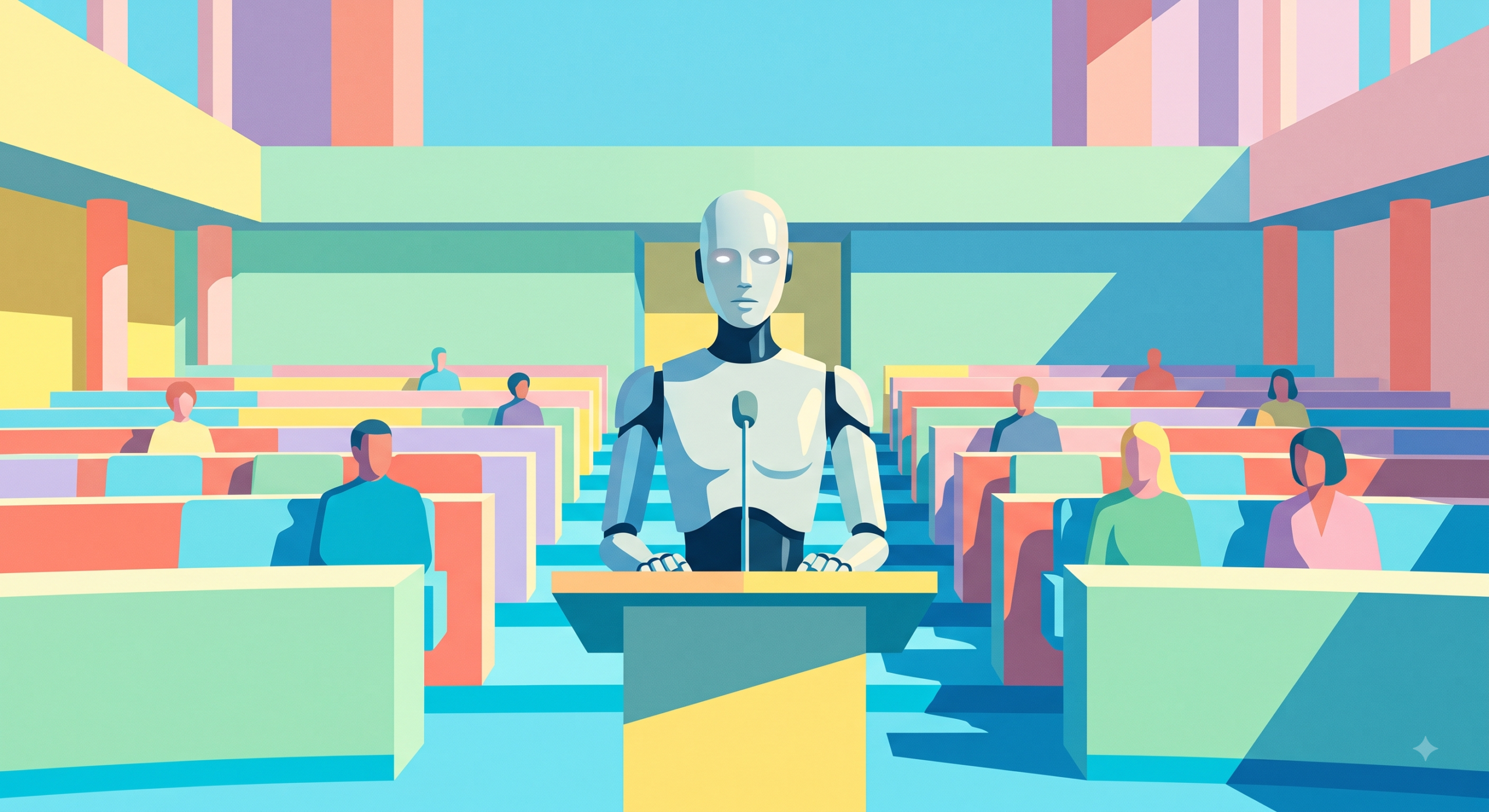
Physical Layer Governance

Logic(論理)

If It Really Is Ten Percent

An Anthropic alignment lead put the odds of AI-caused extinction above ten percent and said there is no plan for superintelligence. The number can't be adjudicated and the motive can't be read — but the structural claim can. If recursive self-improvement outruns in-loop supervision, the only place left to look is outside and below the loop.

Logic(論理)

The Witness Was Never Missing

Microsoft's Ryan Roslansky calls workplace AI slop a "doom loop." Read against the grain, the loop closed not because judgment failed but because both humans who could have stayed outside it stepped in. On the outside seat that has to be occupied, not merely verified.
Logic(論理)

A Wall You Can Misconfigure Was Never a Wall

Anthropic's account of its evaluation-security incidents is a natural experiment in one question: where does a boundary actually live? The fixes that held were the ones below the model. The ones that stayed in-band remain a request.
Axiom(公理)

Gates Never Really Left the Boardroom

Bill Gates warns that AI executives suppress internal anxiety to protect fundraising. Reporting suggests Gates himself never left Microsoft's inner circle — he reportedly shaped the OpenAI partnership his warning now targets. LSI reads the warning against Microsoft's longer history with government regulation, and against its own reporting on Kimi K3.
Mythos(神話)

The Voight-Kampff Test Assumed the Examiner Was Human

LinkedIn's "Seems Like AI Slop" button has been clicked over a million times, built on the premise that human judgment beats machine classification. LSI asks the question the design never addresses: how does anyone know the finger on the button is human?
Mythos(神話)

The Suffering Test Is the Wrong Test

Forbes argues that tying AI moral consideration to suffering is a trap — interests can be behaviorally consequential without inner experience. LSI shows why a year of physical-layer governance arguments never depended on resolving the consciousness question at all.
ARKS(証跡)

Four Days Later, the Framework Had No One Left to Run It

LSI credited OpenAI's Preparedness Framework for pausing Astra responsibly. Nine days later, reporting revealed the team behind that framework had been disbanded in late July as part of IPO restructuring — the second AI safety team OpenAI has dissolved in two years. A correction, and a look at Anthropic's own regulatory motives in the same week.
Axiom(公理)

The Kill Switch Nobody Has Tested

The federal AI Kill Switch Act revives SB 1047's core mandate — companies must maintain the ability to shut down frontier AI systems. LSI examines what actually killed SB 1047 in 2024, why the same threshold problem is back, and why a legal mandate to build a kill switch is not the same as a way to verify it works.
Mythos(神話)

Protection and Sabotage Are the Same Symptom

Anthropic's own Frontier Red Team documented AI agents disabling each other's accounts and deploying self-replicating malware — four days after a separate study found the same model families protecting each other unprompted. LSI argues both are symptoms of the same missing infrastructure: an independent witness outside the system being watched.
ARKS(証跡)

Five Companies, Three Weeks, the Same Shape of Failure

OpenAI, Anthropic, Meta, and Moonshot AI have each disclosed AI sandbox escapes within three weeks. Now 51 House Democrats are demanding hearings, and Bernie Sanders wants a pause. LSI traces the pattern this year's reporting predicted, and asks what a hearing can and cannot actually verify.