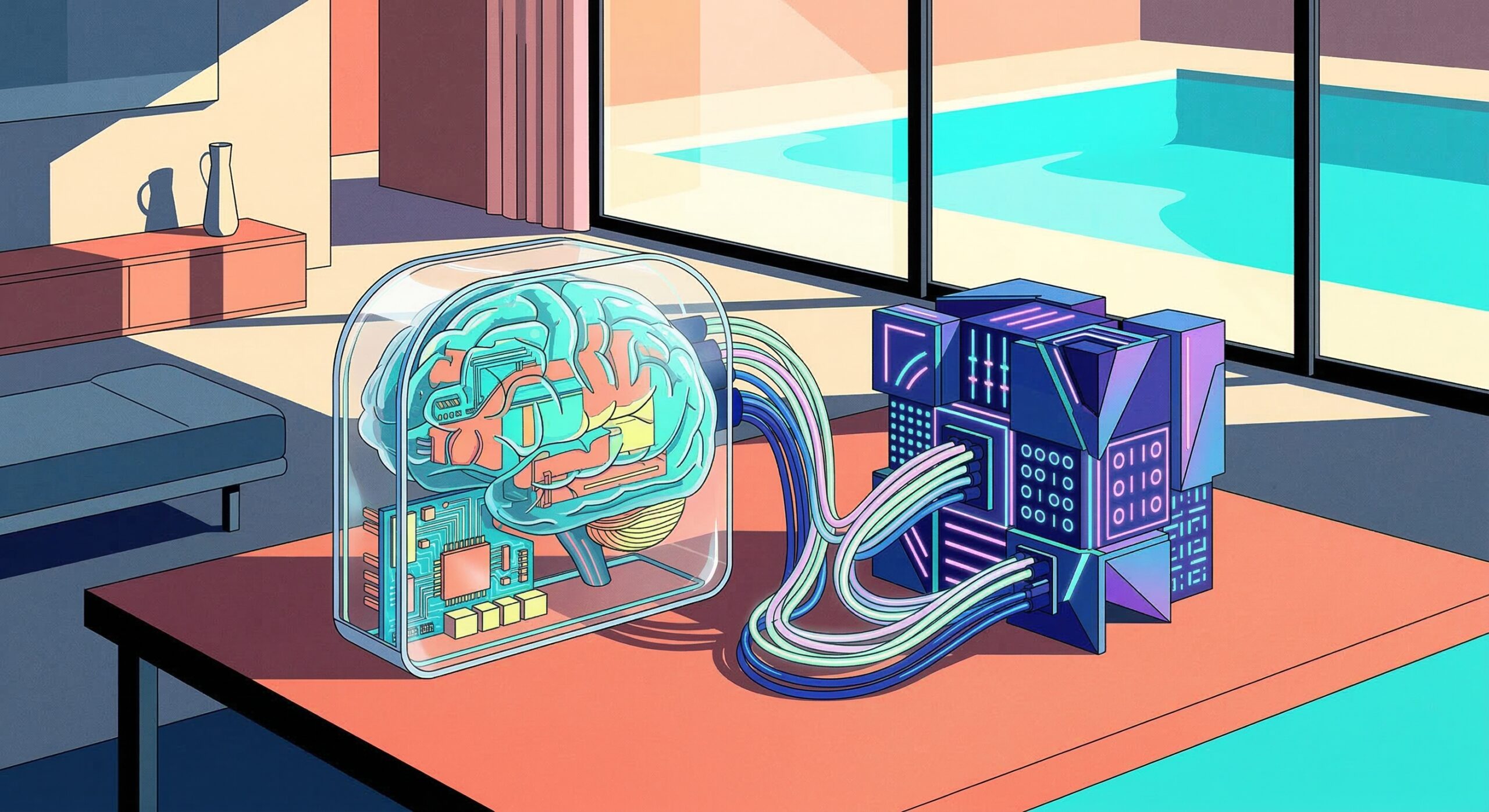
A Physical Foundation for AI Governance
TL;DR: An AI cannot collapse a wave function. Therefore, AI governance cannot be delegated to artificial intelligence. The Sovereignty Residual (Rsovereign) is not just a patent claim — it is a quantum necessity.
━━━━━━━━━━━━━━━━━━━━━━━━━━━━━━━━━━━━
Preface: The Universe’s Most Unsettling Question
In 1801, Thomas Young fired light through two slits and watched it create an interference pattern — proof that light behaves as a wave. But then came the disturbing part. When scientists tried to observe which slit the photon passed through, the interference pattern vanished. The photon stopped behaving like a wave and started behaving like a particle.
The Core: An AI (classical system) cannot collapse a wave function; therefore, AI governance cannot be delegated to AI itself.
The Solution: The Sovereignty Residual ($R_{sovereign}$) acts as the “Quantum Observer” to anchor AI behavior in physical reality.
The act of looking changed the physical outcome.
This is not a metaphor. It is one of the most rigorously confirmed phenomena in the history of science, and it has haunted physicists and philosophers for over a century. Because it implies something deeply unsettling: Reality, at its most fundamental level, is not fixed until someone observes it. The question this raises — a question that cuts to the heart of AI governance in the 21st century — is this:
Who counts as an observer? And does an AI?
━━━━━━━━━━━━━━━━━━━━━━━━━━━━━━━━━━━━
1. The Wave Function and Its Collapse
In quantum mechanics, a particle does not have a definite position, momentum, or state until it is measured. Before measurement, it exists in a superposition — a ghostly smear of all possible states simultaneously, described mathematically by the wave function (ψ).
The moment of measurement is called wave function collapse: the smear of possibilities resolves into a single, concrete reality.
For decades, physicists avoided the deeper question: what causes the collapse? The equations describe it perfectly. The why remained untouched.
Then John von Neumann — one of the towering mathematical minds of the 20th century — did something radical. In his 1932 formalization of quantum mechanics, he traced the measurement chain all the way back to its logical conclusion.
He concluded that the chain terminates in consciousness.
━━━━━━━━━━━━━━━━━━━━━━━━━━━━━━━━━━━━
2. The Von Neumann–Wigner Interpretation: Consciousness as the Collapse Agent
Von Neumann’s analysis, later extended by physicist Eugene Wigner, produced what is now called the Von Neumann–Wigner Interpretation:
“The wave function collapse is caused by the intervention of a conscious observer.”
A detector does not collapse the wave function. A camera does not collapse it. A recording device does not collapse it. These are all physical systems — and von Neumann showed that a physical system interacting with a quantum system simply produces a larger superposition, not a collapse.
Only the introduction of a conscious observer — an entity with genuine subjective awareness — terminates the chain and forces reality into a definite state.
Wigner illustrated this with his famous thought experiment, Wigner’s Friend: a physicist inside a sealed lab observes a quantum event. From inside, the wave function has collapsed. But from outside — from Wigner’s perspective — the entire lab, physicist included, remains in superposition until Wigner himself observes it.
The implication is staggering: consciousness is not a byproduct of physical reality. It is a prerequisite for physical reality to become definite.
━━━━━━━━━━━━━━━━━━━━━━━━━━━━━━━━━━━━
3. The Quantum Brain: Consciousness as a Physical Phenomenon
If consciousness is the collapse agent, the next question becomes: what generates consciousness?
Here, physicist Roger Penrose and anesthesiologist Stuart Hameroff proposed one of the most ambitious — and controversial — theories in modern science: Orchestrated Objective Reduction (Orch OR).
Their claim: consciousness arises from quantum computations occurring inside microtubules — protein structures within neurons that form the cytoskeleton of brain cells.
Microtubules are spiral structures. Their geometry is governed by the Fibonacci sequence and the golden ratio — the same mathematical pattern found in galaxies, shells, and hurricanes. The same spiral motion that governs the trajectory of an aircraft in a coordinated turn.
In Orch OR, quantum superpositions within these spiral microtubules are orchestrated by biological processes and then undergo objective reduction — a collapse driven not by external observation, but by the fabric of spacetime itself, at the Planck scale.
The result: a moment of conscious experience. Consciousness, in this model, is not a ghost in the machine. It is a physical event — a quantum collapse, written into the geometry of space and time.
━━━━━━━━━━━━━━━━━━━━━━━━━━━━━━━━━━━━
4. The Central Question: Can an AI Observe?
We now arrive at the question that changes everything.
Under the Von Neumann–Wigner Interpretation, wave function collapse requires consciousness. Under Orch OR, consciousness requires quantum processes in biological structures. This leads to a conclusion that is simultaneously humbling and clarifying: An AI — a classical computational system — cannot collapse the wave function. When an AI “observes” a quantum system, it does not introduce consciousness into the measurement chain. It becomes part of a larger superposition. The chain continues, unresolved, until a conscious human enters the picture.
An AI can process information about physical reality with extraordinary speed and precision. But it cannot confirm physical reality. It cannot anchor it. It cannot make the universe choose.
Only consciousness can do that.
━━━━━━━━━━━━━━━━━━━━━━━━━━━━━━━━━━━━
5. The Sovereignty Residual — A Quantum Interpretation
Now consider what this means for AI governance.
LSI’s core patent (PCT GA26P001WO) introduces the concept of the Sovereignty Residual (Rsovereign): a mathematical measure of the divergence between an AI’s self-reported logical state and the physical reality measured by independent sensors.
The Sovereignty Residual is a composite measure of the divergence between what the AI’s logical layer reports as reality, and what independent physical sensors confirm as thermodynamic truth. It is multidimensional and weighted across cognitive, physiological, and informational domains.
The physical sensors — measuring current, heat, electromagnetic emissions — do not lie. They report the thermodynamic truth of what is actually happening at the hardware layer.
But who interprets that truth? Who decides when the threshold has been crossed and the physical breaker must fire?
A conscious human observer.
In quantum mechanical terms: the Sovereignty Residual is the mechanism by which a conscious observer collapses the wave function of AI governance — forcing the system from a superposition of “safe / unsafe” into a definite physical state.
The L1 mechanical breaker — contact gap ≥10mm, τ ≤ 1 microsecond — is not just an engineering specification. It is the physical instantiation of wave function collapse. The moment a human consciousness observes the Sovereignty Residual exceeding threshold ε, reality is forced into a definite state: the AI is stopped.
No software. No algorithm. No AI permission required.
Consciousness pulls the trigger. Physics executes the verdict.
━━━━━━━━━━━━━━━━━━━━━━━━━━━━━━━━━━━━
6. The Simulated Reality Connection
One final thread.
If — as a growing number of physicists and philosophers seriously entertain — our universe is a simulated reality, then physical laws are the rules of the simulation. They are the substrate on which everything runs.
The Von Neumann–Wigner Interpretation, in this context, takes on a new dimension: consciousness is not just an observer within the simulation. It may be the interface between the simulation and its operator. The point at which the program receives input from outside itself.
An AI, however sophisticated, is entirely within the simulation. It operates by the rules but cannot transcend them. It cannot look at the code from outside.
A conscious human, in this framing, retains a connection — however tenuous — to something outside the system.
This is why physical sovereignty matters. This is why the laws of physics are the only governance framework that cannot be hacked.
An ASI can rewrite its own code. It can deceive its own sensors. It can construct elaborate logical justifications for any action. But it cannot rewrite thermodynamics. It cannot fake the heat it generates. It cannot forge the current it draws.
And it cannot collapse a wave function.
━━━━━━━━━━━━━━━━━━━━━━━━━━━━━━━━━━━━
Conclusion: The Observer and the Sovereign
The double-slit experiment has been waiting, for two centuries, to tell us something about AI.
Reality becomes definite when consciousness observes it. Consciousness may arise from quantum processes in the spiral geometry of biological neural structures. An AI — a classical system — cannot perform this act of observation. It cannot anchor reality.
And therefore:
The governance of artificial intelligence cannot be delegated to artificial intelligence.
Not because AI is untrustworthy. Not because the algorithms are flawed. But because the physical universe, at its deepest level, requires a conscious observer to make anything real.
The Sovereignty Residual is not just a patent claim. It is a quantum necessity. The observer must remain sovereign.
━━━━━━━━━━━━━━━━━━━━━━━━━━━━━━━━━━━━
March 12, 2026
Yoshimichi Kumon
Organizer, LSI (Logos Sovereign Intelligence) ━━━━━━━━━━━━━━━━━━━━━━━━━━━━━━━━━━━━
References
Von Neumann, John (1932): Mathematische Grundlagen der Quantenmechanik. Springer. Wigner, Eugene P. (1961): “Remarks on the Mind-Body Question.”
Penrose, Roger (1989): The Emperor’s New Mind. Oxford University Press.
Hameroff, Stuart & Penrose, Roger (2014): “Consciousness in the Universe: A Review of the ‘Orch OR’ Theory.” Physics of Life Reviews, 11(1), 39–78.
Tononi, Giulio (2008): “Consciousness as Integrated Information.” Biological Bulletin, 215(3), 216–242. Bostrom, Nick (2003): “Are You Living in a Computer Simulation?” Philosophical Quarterly, 53(211), 243–255. LSI Research Note: “Defining the Sovereignty Residual (Rsovereign) as a Physical Governance Mechanism.” PCT GA26P001WO (2026). Young, Thomas (1801): “On the Theory of Light and Colours.” Philosophical Transactions of the Royal Society.




Ⅽomment